 GST : 06AAICB3630J1ZSGST : 06AAICB3630J1ZS
 Get a Quote
 Send Inquiry
IOT Embedded Software Development
Price 500000 INR/ Unit
MOQ : 1 Unit
IOT Embedded Software Development Trade Information
- Minimum Order Quantity
- 1 Unit
- Payment Terms
- Cash in Advance (CID)
- Supply Ability
- 10 Units Per Week
- Delivery Time
- 2-10 Days
- Main Domestic Market
- All India
About IOT Embedded Software Development
IoT Embedded Software Development
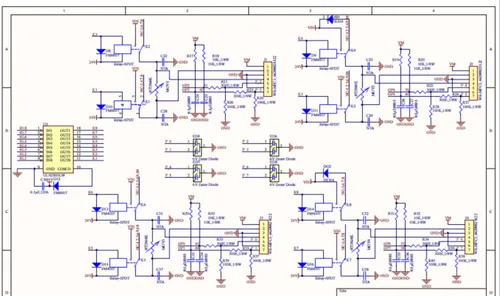
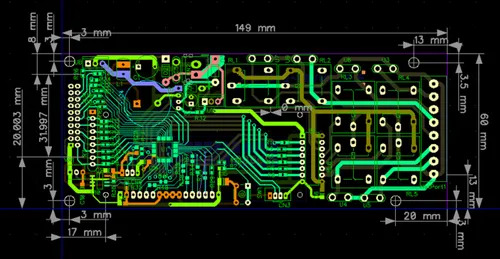
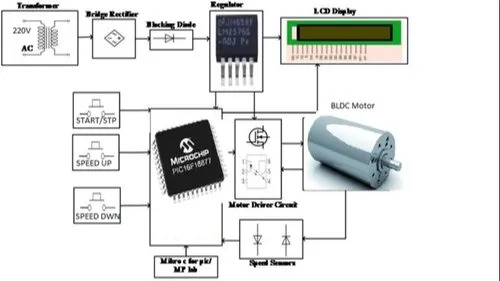
IoT Embedded Software Development plays a crucial role in connecting physical devices with the digital world, enabling real-time automation, monitoring, and intelligent decision-making. It involves designing, programming, and optimizing firmware that runs directly on embedded hardware, allowing the integration of sensors, actuators, microcontrollers, and wireless communication protocols.
Modern embedded IoT systems are designed to be highly efficient, secure, and scalable. They must operate with precision, often in resource-constrained environments where power consumption, processing capability, and memory are limited. Therefore, embedded software developers work with low-level programming languages such as C/C++, Python, or Rust, and use real-time operating systems (RTOS) to ensure deterministic response and consistent system behavior.
Connectivity remains at the core of IoT development. Embedded systems communicate using technologies such as Wi-Fi, Bluetooth, LTE, LoRaWAN, Zigbee, MQTT, and Modbus. This communication enables IoT devices to send and receive data securely through cloud platforms and mobile applications, supporting features like predictive analytics, automation control, and remote diagnostics.
Security is another critical component of embedded IoT development. Secure boot, data encryption, access control, and firmware-over-the-air (FOTA) updates ensure safe operation and long-term maintainability, especially in healthcare, manufacturing, smart home, and industrial automation environments.
IoT Embedded Software Development continues to revolutionize industries by delivering smarter, connected, and highly interactive solutions. The advancement of artificial intelligence and edge computing is empowering IoT devices to make autonomous decisions, increase efficiency, and reduce operational costs. From medical ventilators to industrial systems, IoT embedded technology is shaping the future of intelligent automation.
Tell us about your requirement

Price:
Quantity
Select Unit
- 50
- 100
- 200
- 250
- 500
- 1000+
Additional detail
Mobile number
Email


Contact Details

- 1ST FLOOR, RADHE DARSHAN, PLOT NO 801, WARD NO.7, DAULATABAD IND. AREA, Gurugram - 122006, Haryana, India
- Phone : 08071930888
BONDHTECH SYSTEMS PRIVATE LIMITED
GST : 06AAICB3630J1ZS

- Mr. Mukesh (Director)
- Mobile : 08071930888
- Send Inquiry
 Send Inquiry
 Send Inquiry
BONDHTECH SYSTEMS PRIVATE LIMITED
All Rights Reserved.(Terms of Use)
Developed and Managed by Infocom Network Private Limited.
Developed and Managed by Infocom Network Private Limited.


 English
 Spanish
 French
 German
 Italian
 Chinese (Simplified)
 Japanese
 Korean
 Arabic
 Portuguese